
When you travel abroad, staying connected is essential — for maps, messaging, ride‑hailing, and even digital payments. But international roaming can feel like a luxury when you see the bill later.
That’s where eSIM technology steps in — offering travelers a smart, digital alternative to expensive roaming. But how much can you really save? Let’s break it down clearly and practically.
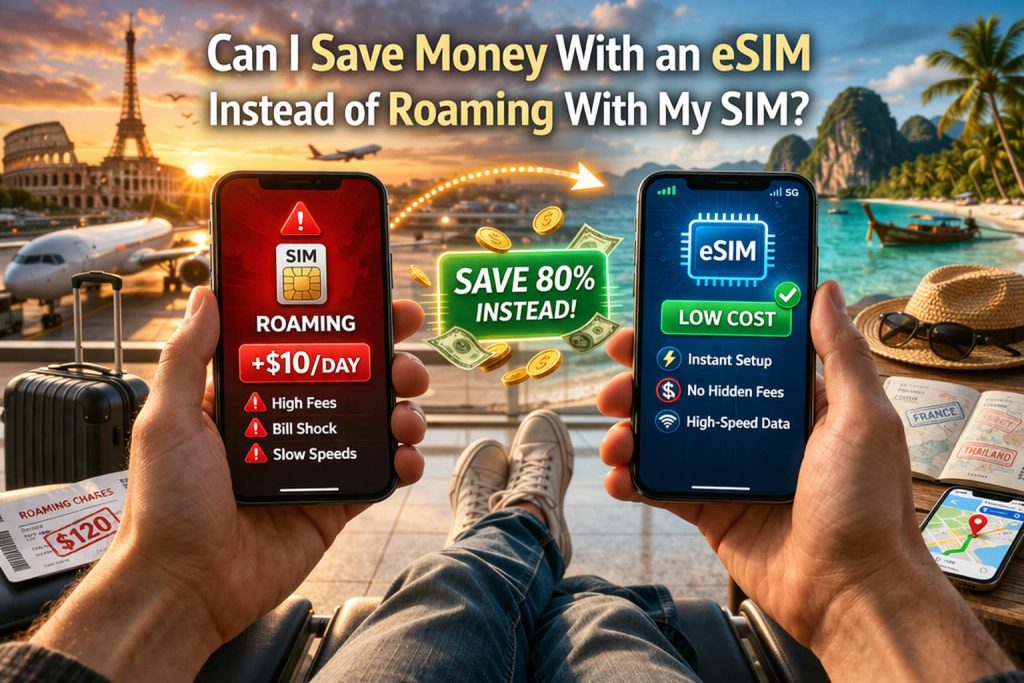
I. Why Roaming Drains Your Budget
Roaming allows your phone to use local networks overseas, but your home carrier still controls the billing. It sounds convenient, yet it’s one of the most overpriced travel services today.
Here’s what adds to roaming cost:
- Daily access fees: Most operators charge $10–$20 per day for “data packs.”
- Hidden data consumption: GPS, cloud syncing, and messaging apps quietly use background data.
- Limited data quotas: Exceeding your roaming limit triggers premium surcharges.
- Unclear pricing: Carriers often advertise “unlimited” plans with slowdowns after small usage caps.
Even casual travelers spending a week abroad can face $70–$150 in roaming charges for moderate Internet use — often without realizing it.
II. eSIMs Explained — The Smarter Way to Connect
An eSIM (embedded SIM) replaces the physical SIM card with a digital version that you can install instantly via a QR code. It connects you directly to local mobile operators instead of routing data through your home carrier.
Key advantages of using an eSIM abroad:
- Instant digital setup: Purchase online and activate in minutes — no waiting, no plastic SIM cards.
- Local data rates: Pay Egyptian (or local) prices, not international roaming rates.
- Flexible duration: Choose plans for 3, 7, 15, or 30 days — you only pay for what you need.
- Keep your number: Use your physical SIM for calls or messages while your eSIM handles data.
- Eco‑friendly: 100% digital — no waste, no packaging.
For instance, travelers to Egypt can find affordable and flexible data plans starting from $5 for 3 days or $11.90 for 30 days at [https://egyptesim.com/]. That’s a fraction of what most carriers charge for a single day of roaming in 2026.
III. Real Travel Cost Comparison
To understand the savings more clearly, here’s a quick comparison between traditional roaming and a travel eSIM:
| Trip Type | Typical Roaming Cost | Egypt eSIM Cost | Savings |
| 3‑Day City Break | $30–$60 | $5 | 80–90% |
| 1‑Week Vacation | $70–$100 | $9.50 | ~85% |
| 2‑Week Adventure | $120–$150 | $10.90 | ~90% |
| 30‑Day Stay | $300+ | $11.90 | ~95% |
As shown, switching to an eSIM can save hundreds of dollars — especially for frequent travelers, digital nomads, or remote workers who rely heavily on data.
IV. Beyond Cost — The Hidden Benefits of eSIMs
Money isn’t the only thing you save when using an eSIM. You also reduce hassle, time, and risk.
Practical advantages to know:
- Consistent 4G coverage: Works across all major cities and tourist areas in Egypt.
- Hotspot sharing: You can connect your laptop or a friend’s phone without buying a second SIM.
- Safe setup: Your QR code arrives directly by email — no need to hand over your phone to strangers at airport stalls.
- WhatsApp continuity: Keep chatting with your existing number; your contacts won’t even notice you’re abroad.
- Easy top‑ups: If you need more data, simply extend or renew your plan online within minutes.
This simplicity makes eSIMs perfect for both leisure and business travelers who need reliable connectivity on the go.
V. When Is Roaming Still Useful?
Roaming isn’t obsolete — it can still serve you in certain cases:
- If your company provides a corporate global roaming plan with fixed rates.
- For short transits (under 24 hours) when you don’t need steady data.
- If your local bank app requires SMS verification tied to your home number.
However, for 99% of travelers, eSIMs offer more flexibility, transparency, and affordability.
VI. A Quick Recap — Why eSIMs Win
Choose eSIM if you value:
- Full control over your data usage and cost
- Instant setup before or during your trip
- Strong coverage across cities and remote areas
- Easy hotspot sharing with others
- Support for multiple devices (phones, tablets, laptops)
Choose roaming only if you:
- Need your home number for business calls
- Have an all-inclusive international plan
- Stay for less than one day
For everyone else — especially independent travelers, students, and families — eSIMs are clearly the best value.
VII. The Bottom Line
Yes, you can absolutely save money by using an eSIM instead of roaming with your physical SIM card.
With a modern travel eSIM, you get local network pricing, instant online activation, and nationwide coverage without the shock of post-trip bills.
If you’re heading to Egypt in 2026, check out [egyptesim.com], where travelers can pick from flexible 3‑ to 30‑day plans delivered directly to your email — fast, easy, and affordable. That’s what smarter connectivity looks like in the era of digital travel.